
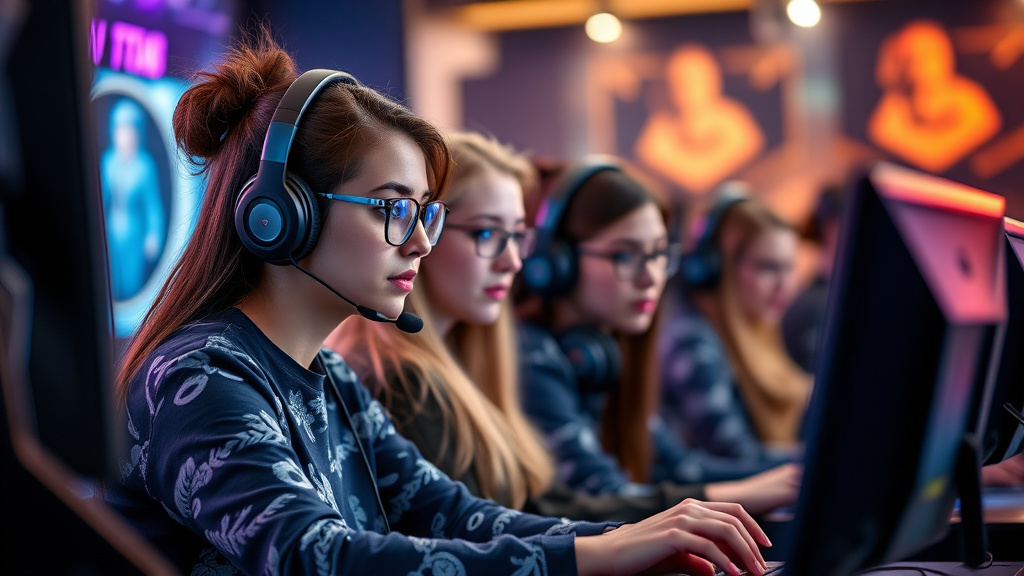
For decades, esports has been considered an exclusive boys’ club, but a new generation of female gamers is shattering this outdated stereotype. From high-level League of Legends to high-stakes Counter-Strike tournaments, women are not only participating—they’re leading the way. This article examines how groundbreaking female players are surpassing the glass ceiling, pushing back against industry biases, obtaining sponsorships, and encouraging millions of young girls to pick up a controller and assert their deserved place in gaming’s premier competitions.
Up-and-Coming Achievers: Women Building Their Legacy
The terrain of professional esports is quickly evolving as exceptional female players gain prominence in various games and competitive levels. Players like the Valorant star Jett and League of Legends’ rising stars have proven that talent and hard work transcend gender boundaries. These athletes are gaining acknowledgment through merit, landing positions on top-tier squads, and competing against the globe’s elite competitors. Their achievements galvanize up-and-coming players while proving that ability has no gender, transforming perceptions within the competitive gaming world and attracting mainstream media attention.
Sponsorship deals and organizational support have become more readily available to skilled women athletes, marking a significant shift in sector investment patterns. Major brands recognize the commercial potential and genuine appeal of investing in women’s esports, leading to high-value partnerships and endorsement opportunities. This financial backing enables female athletes to pursue gaming professionally without sacrificing financial stability, a key component in long-term career success. As companies support female talent, they concurrently establish women’s presence in esports competition and establish routes for aspiring players to build sustainable careers.
Grassroots participation and community-driven programs have increased the visibility of women in esports, creating supportive environments for women gamers. Tournament organizers now enthusiastically support female-inclusive competitions and highlight female accomplishments across broadcast channels and social media. Coaching initiatives and all-female gaming teams offer crucial support networks, encouraging teamwork and skill exchange. This growing movement demonstrates that the esports industry’s future depends on diversity, inclusion, and valuing skill regardless of gender identity.
Barriers and Obstacles
Despite their expanding presence, female esports players continue to face significant obstacles that their male counterparts seldom experience. Institutional bias, gender-based harassment, and unequal prize distributions remain prevalent throughout the industry. Many women report experiencing hostile digital spaces, with comments spanning derogatory comments about their gaming abilities to direct aggression. Tournament organizers and game developers have been reluctant to implement comprehensive harassment prevention measures, putting female competitors at risk. Additionally, the absence of female representation in coaching, management, and broadcasting positions perpetuates a culture where women feel excluded in their own competitive environments.
Financial hurdles further complicate the path for prospective women esports professionals. Sponsorship partnerships remain disproportionately skewed toward male players, making it more difficult for women to secure the resources necessary for training and competition. Teams often invest less in female rosters, citing reduced audience engagement—a vicious cycle that constrains exposure and growth. Educational institutions and youth programs also underperform in encouraging girls in esports, creating a developmental gap that begins early. These linked obstacles demonstrate that achieving parity requires comprehensive transformation across various sectors of the esports ecosystem.
Developing a Increasingly Inclusive Tomorrow
The esports industry stands at a critical crossroads where significant change is not merely possible but essential. Organizations, game developers, and community leaders are increasingly recognizing that diversity boosts competition and widens the market. By implementing mentorship programs, organizing all-female events, and deliberately pursuing female talent, the industry can create pathways for aspiring female gamers. Investment in grassroots initiatives and academic partnerships will nurture the next generation of champions while dismantling systemic barriers that have long hindered women’s participation and success.
- Create targeted financial support for women’s esports growth programs
- Create coaching partnerships connecting seasoned female professionals with up-and-coming players
- Establish anti-harassment policies with strict enforcement mechanisms
- Increase media coverage and sponsorship opportunities for women players
- Fund community-level gaming initiatives serving underrepresented communities
The movement toward genuine inclusion in esports demands ongoing dedication from every stakeholder. As female athletes persistently break records and challenging conventions, their accomplishments motivate for numerous young women worldwide. The sector’s development toward parity advantages everyone—fostering engaged communities, driving innovation, and unlocking untapped talent pools. When esports embraces diversity wholeheartedly, it transforms from a niche entertainment sector into a genuinely worldwide movement that honors excellence beyond gender.
