
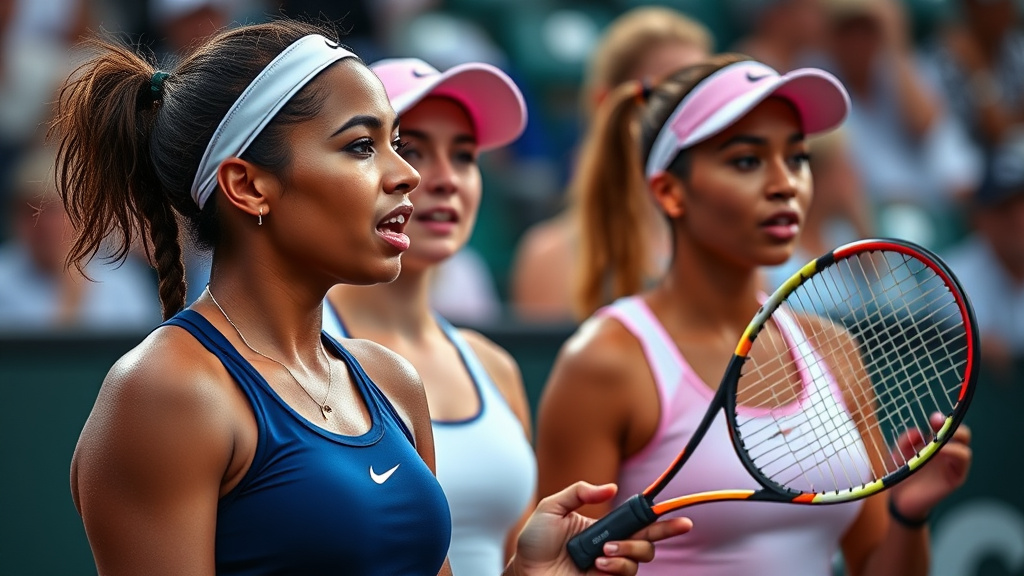
For many years, women’s tennis players have competed with the same intensity and skill as their male counterparts, yet earned significantly less prize money at top-tier events. Now, prominent competitors are speaking out, demanding equal pay for equal performance. This expanding push challenges the longstanding wage disparity that has long impacted professional tennis, raising critical questions about fairness in sports. As these strong advocates unite, they’re transforming discussions around fairness, recognition, and the true value of women’s athletic excellence on the world’s biggest stages.
The Push for Fair Prize Compensation
The gap between prize money between male and female tennis players has become increasingly untenable in today’s sporting landscape. Women’s champions at Grand Slam tournaments have traditionally been given substantially lower payouts than their male competitors, despite producing equally engaging performances and drawing enormous global audiences. This pay disparity sends a troubling message about how society assesses women’s athletic achievements, encouraging leading competitors to demand transparent accountability and equitable pay structures.
Prominent tennis governing bodies have started recognizing these inequities, with some major tournaments introducing equal pay policies in the past few years. However, progress remains uneven across different competitions and governing bodies. Players argue that genuine parity demands standardized compensation across all major tournaments, not selective initiatives. The movement has picked up steam through strategic advocacy, public campaigns, and unified player statements that emphasize the contradiction of paying women less for equivalent performances.
Beyond monetary rewards, this fight represents a wider movement for acknowledgment and regard within the sports industry. Equal prize money symbolizes equal value, equal opportunity, and equal respect for female athletes’ contributions to tennis. As players remain committed to institutional transformation, they’re sparking dialogue about equal treatment across all sports industries, questioning outdated traditions and demanding that compensation structures mirror contemporary values of fairness and inclusion.
Historical Imbalances and Improvement
The wage disparity between genders in professional tennis has deep historical roots, stemming from old-fashioned beliefs about audience interest and market potential. For most of tennis’s history, major tournaments distributed significantly lower prize pools to women’s events, in spite of comparable viewership and sponsorship revenue. This gap grew harder to justify as women’s tennis produced significant income and drew worldwide viewers. Historic milestones, such as the 2007 Wimbledon decision to equalize prize money, demonstrated that equal pay was achievable and warranted, catalyzing broader changes across the sport.
Despite these victories, substantial gaps remain at several prestigious tournaments worldwide. The Australian Open and French Open have achieved full pay equality, while other major events continue offering unequal compensation. Players like Serena Williams and Naomi Osaka have leveraged their platforms to advocate for systemic change, inspiring a new generation of athletes to demand fair treatment. Their persistent activism has shifted cultural conversations, proving that progress requires continuous pressure and unwavering commitment|dedication|resolve to gender equity in professional sports.
Current Challenges and Upcoming Prospects
Despite considerable advancement in recent years, women’s tennis players continue to face substantial obstacles in their quest for equal prize money. Leading events still distribute unequal budgets for male and female competitions, with some events justifying disparities through obsolete attendance and viewership arguments. However, these claims increasingly lack merit as women’s matches consistently draw substantial crowds and produce significant television revenue, undermining the legitimacy of historical pay structures.
- Persistent wage disparities between genders at Grand Slam tournaments remain substantial
- Media coverage gaps continue to undervalue women’s sporting achievements
- Sponsorship partnerships remain disproportionately skewed toward male players
- Tournament organizers push back against implementing equitable prize structures
- Global advocacy campaigns are accelerating transformation in professional tennis
Looking ahead, the future of women’s tennis appears more optimistic as momentum grows around genuine equality. Younger generations of players are increasingly outspoken and unified in their demands, while expanding fan backing strengthens their bargaining power. Several tournaments have already pledged equal prize money, setting precedents that pressure remaining events to follow suit, suggesting that full wage parity in professional tennis may finally materialize within the coming years.
